
Most enterprises are adding AI, not building AI capabilities
Tools like ChatGPT, copilots, and point solutions are being adopted in isolation, without a clear view of how AI should work across people, processes, systems, and data to deliver end-to-end business value.
Mamsys brings structure to AI adoption through a formal AI Assessment Framework, a layered operating model (McSOMB), and leadership thinking captured in the book “The Slim Elephant” .


'%3e%3cpath%20d='M10%204.16671C10.001%203.83341%209.93532%203.50327%209.80685%203.19571C9.67837%202.88816%209.4897%202.6094%209.25191%202.37584C9.01413%202.14227%208.73204%201.95861%208.42224%201.83566C8.11243%201.7127%207.78117%201.65294%207.44793%201.65989C7.1147%201.66684%206.78621%201.74035%206.4818%201.8761C6.17739%202.01186%205.9032%202.20711%205.67536%202.45038C5.44751%202.69366%205.27061%202.98003%205.15506%203.29267C5.03952%203.60531%204.98765%203.9379%205.00252%204.27088C4.51269%204.39683%204.05794%204.63259%203.67271%204.96031C3.28749%205.28803%202.98189%205.69911%202.77906%206.16242C2.57623%206.62573%202.48149%207.12913%202.50201%207.63447C2.52254%208.13982%202.65779%208.63388%202.89752%209.07921C2.476%209.42166%202.14454%209.8619%201.93197%2010.3617C1.7194%2010.8614%201.63215%2011.4055%201.67782%2011.9467C1.7235%2012.4879%201.9007%2013.0097%202.19403%2013.4667C2.48735%2013.9238%202.88791%2014.3023%203.36085%2014.5692C3.30245%2015.0211%203.3373%2015.4801%203.46326%2015.918C3.58922%2016.3558%203.8036%2016.7632%204.09318%2017.115C4.38275%2017.4668%204.74136%2017.7554%205.14687%2017.9632C5.55238%2018.1709%205.99617%2018.2933%206.45083%2018.3228C6.9055%2018.3523%207.36139%2018.2883%207.79034%2018.1347C8.2193%2017.9811%208.61221%2017.7412%208.94482%2017.4298C9.27743%2017.1185%209.54267%2016.7422%209.72416%2016.3243C9.90565%2015.9064%209.99953%2015.4557%2010%2015V4.16671Z'%20stroke='%239E66DB'%20stroke-width='1.66667'%20stroke-linecap='round'%20stroke-linejoin='round'/%3e%3cpath%20d='M10%204.16671C9.99903%203.83341%2010.0647%203.50327%2010.1932%203.19571C10.3217%202.88816%2010.5103%202.6094%2010.7481%202.37584C10.9859%202.14227%2011.268%201.95861%2011.5778%201.83566C11.8876%201.7127%2012.2189%201.65294%2012.5521%201.65989C12.8853%201.66684%2013.2138%201.74035%2013.5182%201.8761C13.8226%202.01186%2014.0968%202.20711%2014.3247%202.45038C14.5525%202.69366%2014.7294%202.98003%2014.845%203.29267C14.9605%203.60531%2015.0124%203.9379%2014.9975%204.27088C15.4873%204.39683%2015.9421%204.63259%2016.3273%204.96031C16.7125%205.28803%2017.0181%205.69911%2017.221%206.16242C17.4238%206.62573%2017.5185%207.12913%2017.498%207.63447C17.4775%208.13982%2017.3422%208.63388%2017.1025%209.07921C17.524%209.42166%2017.8555%209.8619%2018.0681%2010.3617C18.2806%2010.8614%2018.3679%2011.4055%2018.3222%2011.9467C18.2765%2012.4879%2018.0993%2013.0097%2017.806%2013.4667C17.5127%2013.9238%2017.1121%2014.3023%2016.6392%2014.5692C16.6976%2015.0211%2016.6627%2015.4801%2016.5368%2015.918C16.4108%2016.3558%2016.1964%2016.7632%2015.9069%2017.115C15.6173%2017.4668%2015.2587%2017.7554%2014.8532%2017.9632C14.4477%2018.1709%2014.0039%2018.2933%2013.5492%2018.3228C13.0945%2018.3523%2012.6386%2018.2883%2012.2097%2018.1347C11.7807%2017.9811%2011.3878%2017.7412%2011.0552%2017.4298C10.7226%2017.1185%2010.4574%2016.7422%2010.2759%2016.3243C10.0944%2015.9064%2010.0005%2015.4557%2010%2015V4.16671Z'%20stroke='%239E66DB'%20stroke-width='1.66667'%20stroke-linecap='round'%20stroke-linejoin='round'/%3e%3cpath%20d='M12.5%2010.8333C11.8004%2010.5872%2011.1894%2010.1392%2010.7444%209.54584C10.2994%208.95251%2010.0404%208.24056%2010%207.5C9.95962%208.24056%209.70056%208.95251%209.25556%209.54584C8.81057%2010.1392%208.19963%2010.5872%207.5%2010.8333'%20stroke='%239E66DB'%20stroke-width='1.66667'%20stroke-linecap='round'%20stroke-linejoin='round'/%3e%3cpath%20d='M14.6658%205.41666C14.8675%205.06715%2014.9815%204.67401%2014.9983%204.27083'%20stroke='%239E66DB'%20stroke-width='1.66667'%20stroke-linecap='round'%20stroke-linejoin='round'/%3e%3cpath%20d='M5.00244%204.27083C5.01892%204.67394%205.13272%205.06707%205.33411%205.41666'%20stroke='%239E66DB'%20stroke-width='1.66667'%20stroke-linecap='round'%20stroke-linejoin='round'/%3e%3cpath%20d='M2.89746%209.08C3.04991%208.95584%203.21305%208.84541%203.38496%208.75'%20stroke='%239E66DB'%20stroke-width='1.66667'%20stroke-linecap='round'%20stroke-linejoin='round'/%3e%3cpath%20d='M16.615%208.75C16.7869%208.84541%2016.95%208.95584%2017.1025%209.08'%20stroke='%239E66DB'%20stroke-width='1.66667'%20stroke-linecap='round'%20stroke-linejoin='round'/%3e%3cpath%20d='M5.00001%2014.9999C4.4257%2015.0002%203.86106%2014.852%203.36084%2014.5699'%20stroke='%239E66DB'%20stroke-width='1.66667'%20stroke-linecap='round'%20stroke-linejoin='round'/%3e%3cpath%20d='M16.6392%2014.5699C16.1389%2014.852%2015.5743%2015.0002%2015%2014.9999'%20stroke='%239E66DB'%20stroke-width='1.66667'%20stroke-linecap='round'%20stroke-linejoin='round'/%3e%3c/g%3e%3cdefs%3e%3cclipPath%20id='clip0_158_49'%3e%3crect%20width='20'%20height='20'%20fill='white'/%3e%3c/clipPath%3e%3c/defs%3e%3c/svg%3e)
Our Philosophy
From Fragmentation to Orchestration
AI must be designed as a layered system — not adopted as isolated tools.
At Mamsys, we treat AI adoption as a multi-layered enterprise capability.
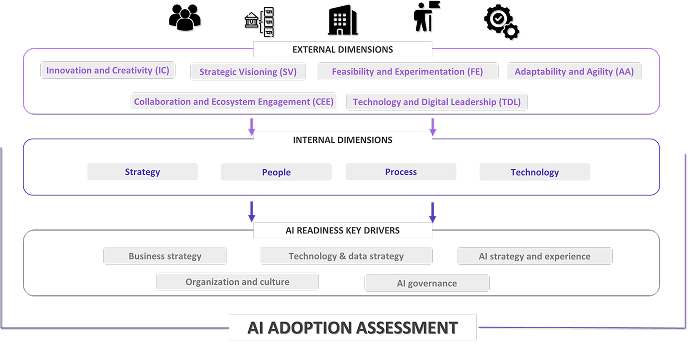
That is why we begin with a structured AI Assessment Framework — to evaluate how AI should integrate across people, processes, systems, and data to create value across the organization.
Execution is governed through McSOMB — the Mamsys Cognitive Synergy Operating Model — which binds these layers into a coherent system where human judgment, process discipline, and machine intelligence reinforce each other.
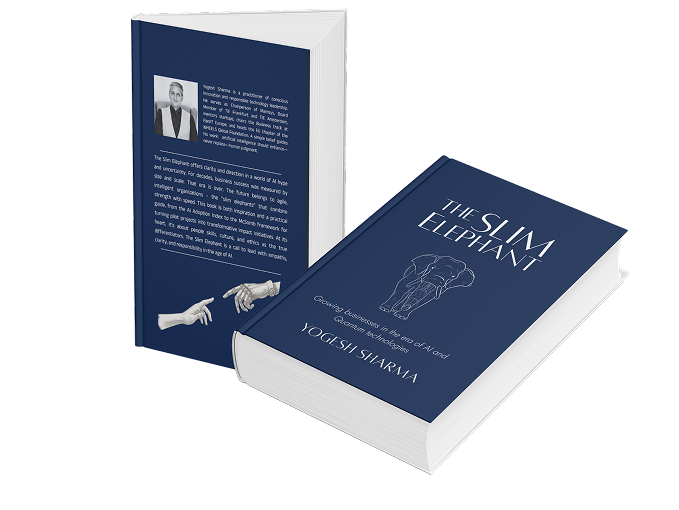
This thinking is articulated in The Slim Elephant — written to help leaders move from fragmented AI usage to intentional, end-to-end AI design.
AI Assessment Framework
Design AI value before you approve AI investment.
AI ROI becomes unclear when investments begin without a shared definition of readiness, scope, and value.
What this assessment enables leaders to decide

Which AI initiatives deserve investment — and which do not
Where ROI is defensible vs. speculative
What should scale now, later, or not at all
Who owns outcomes across business and technology
ROI Positioning
ROI is not a post-implementation calculation.
It is a design decision made before execution begins.

Operating Model
Assessment decides. McSOMB operates.
Once AI decisions are made, value depends on how those decisions are executed, governed, and evolved.
McSOMB—Mamsys Cognitive Synergy Operating Model

Foresight
Run AI proactively, not reactively
Anticipation • Prediction • Early intervention
Prevents value erosion before it happens

Harmony
Coordinate humans, processes & AI at scale
Orchestration • Human-in-the-loop • Controlled automation
Prevents fragmentation after rollout

Resonance
Sustain trust, adoption, and learning
Experience continuity • Feedback loops • Emotional intelligence
Prevents adoption decay over time
What McSOMB actually does
Converts assessed AI intent into repeatable operations
Governs AI behaviour across teams and systems
Ensures AI adapts as business conditions change
Keeps value compounding long after launch
Critical Differentiator
McSOMB is not how AI is chosen. It is how AI survives contact with reality and continues delivering value. - a small update to the text
The AI Assessment defines where ROI should come from. McSOMB ensures ROI is retained, protected, and expanded over time.
The Book
The Slim Elephant
Seeing What Is Already in the Room
The hardest part of AI adoption is not technology. It is seeing the whole system — clearly and honestly.
Most organizations do not ignore AI. They engage with it — actively, enthusiastically, and often intelligently. What they struggle with is seeing AI in its entirety.
Yogesh Sharma captured this pattern in The Slim Elephant — a leadership reflection on how intelligent systems quietly reshape structure, accountability, and decision-making long before outcomes are measured.
The Slim Elephant does not tell leaders what to buy, build, or deploy. It helps them recognize when complexity is being mistaken for progress.